HVAC Portland searches spike the week a furnace quits during a cold snap or an AC unit dies in a July heat spike, and the fix starts with a same-day look at the problem and a written price before anyone touches a wrench. This crew works on knob-and-tube-era bungalows in Irvington and Laurelhurst as often as newer builds near the Pearl District, and the diagnostic fee is quoted up front — never padded once the truck is already in the driveway. Homeowners searching 'HVAC near me' at 6 a.m. with a cold house get the same straight answer on the phone that they'd get standing in the driveway: what's likely wrong, what it costs to check, and what the range looks like before anyone commits.
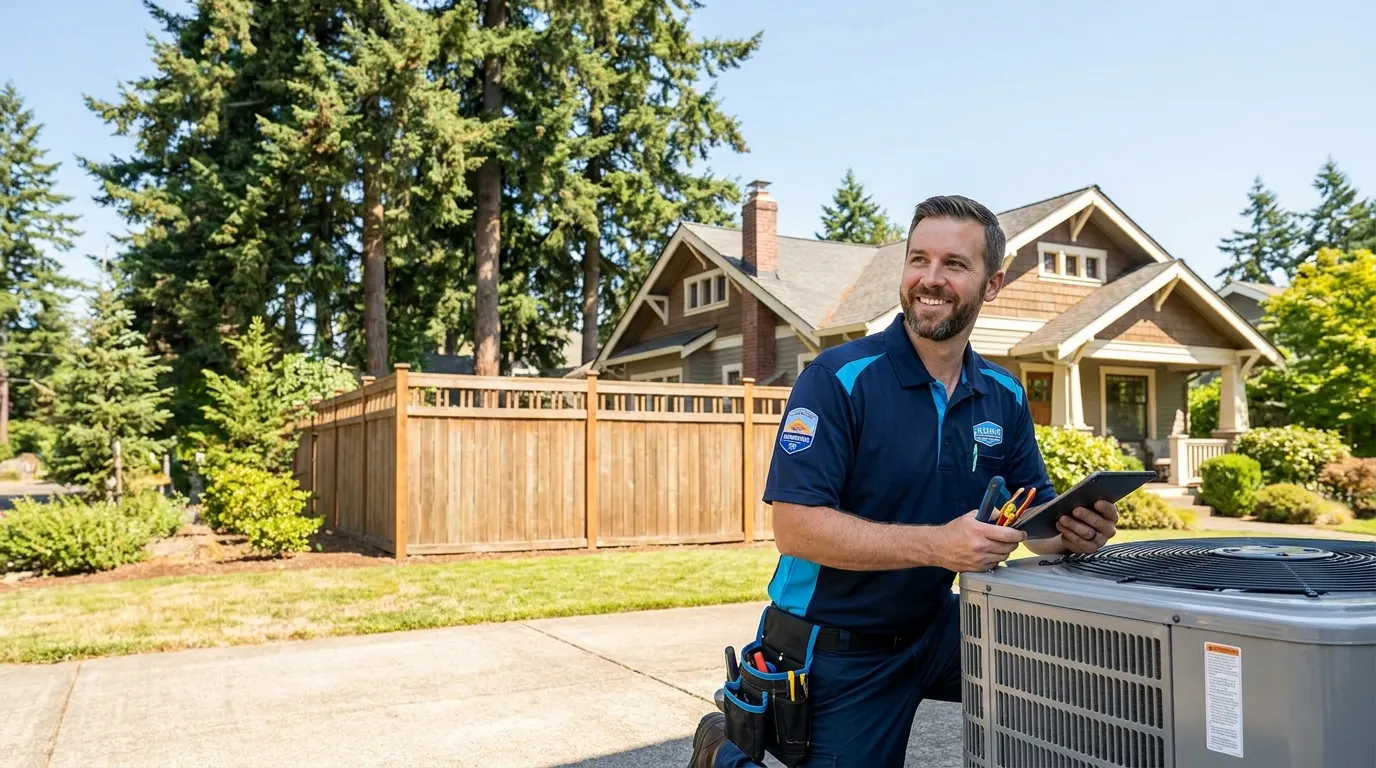
Tell us about your hvac job — we'll get you a fast quote.
A firm, all-in price confirmed before we start — no surprises.
On time, done to standard, and tidy when we leave.
Reach a real Portland hvac technician to describe the problem — no call-center runaround.
We look at the actual system and explain what is going on before any work.
You get the price for the fix up front and decide before we proceed.
Serving Portland and the surrounding area — confirm coverage by phone.
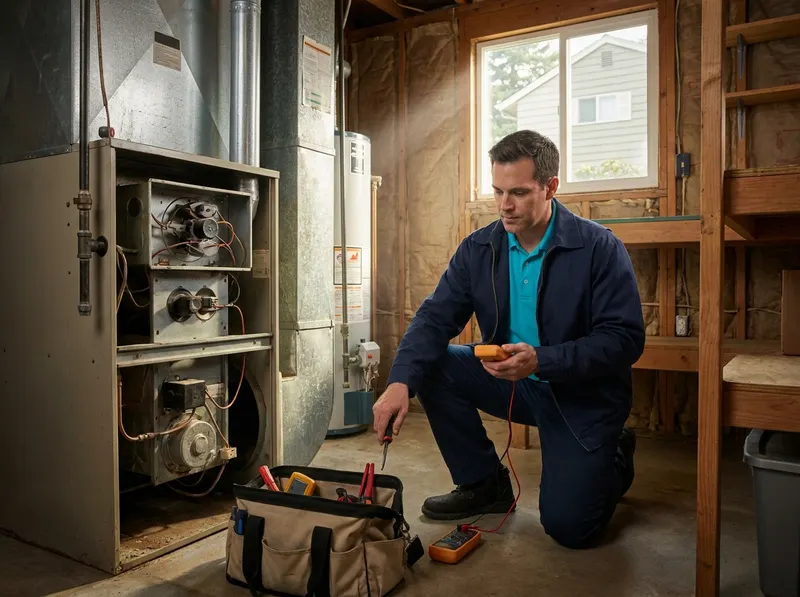
Furnace repair covers no-heat calls, short-cycling, pilot and ignition failures, and blower or thermostat faults. A furnace that won't fire on a 28°F morning near Mount Tabor Park usually traces back to a cracked heat exchanger, a bad igniter, or a clogged filter starving the blower — most single-part failures diagnose and fix in one visit, and the part gets named and priced before it's replaced. Gas furnaces that keep tripping the flame sensor or losing pilot get checked for venting issues too, since Portland's wet winters push moisture into flue systems that older furnaces weren't built to handle.
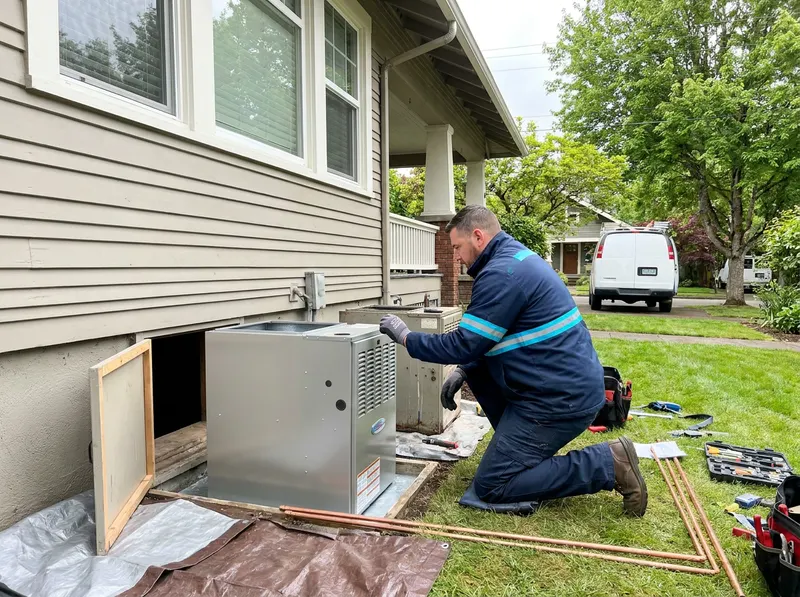
Furnace replacement matters when a unit is past 15 years old, cycling on repeat, or costing more to patch than to swap. Sizing is based on the home's square footage and duct layout, not a generic BTU chart — an undersized furnace in a drafty Multnomah Village craftsman runs constantly and still leaves cold rooms, while an oversized one short-cycles and wastes gas. Load calculations account for the home's insulation era, since a 1920s bungalow near Woodstock loses heat differently than a 1990s build near Lents.
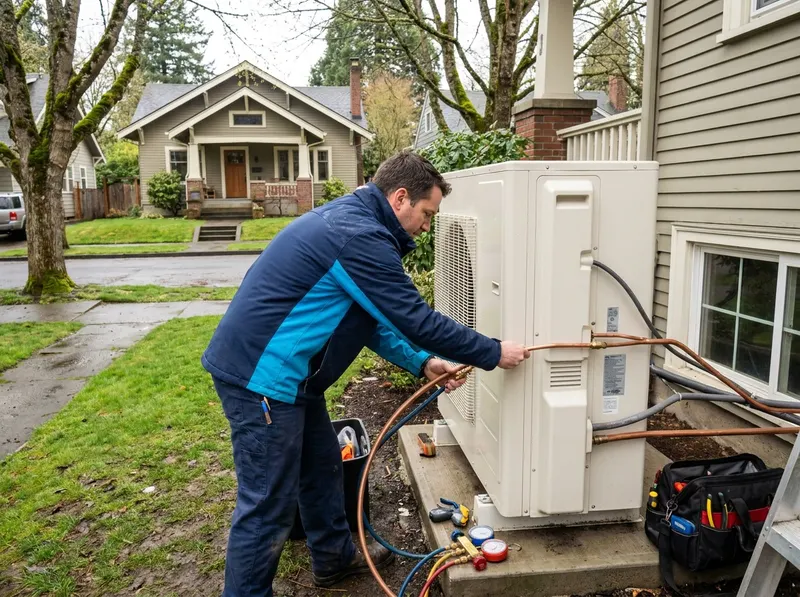
Heat pump installation puts one outdoor unit and matched indoor coil to work heating in winter and cooling in summer, and it's the system Energy Trust of Oregon incentives are built around — a straight furnace or AC swap doesn't qualify the same way. Cold-climate heat pump models hold output down into the low 20s, which matters for houses on higher ground toward Forest Park that run colder overnight than the valley floor. Sizing again follows the actual home, not a flat per-square-foot rule, because a two-story Irvington house with high ceilings loads differently than a single-story Sellwood-Moreland ranch.
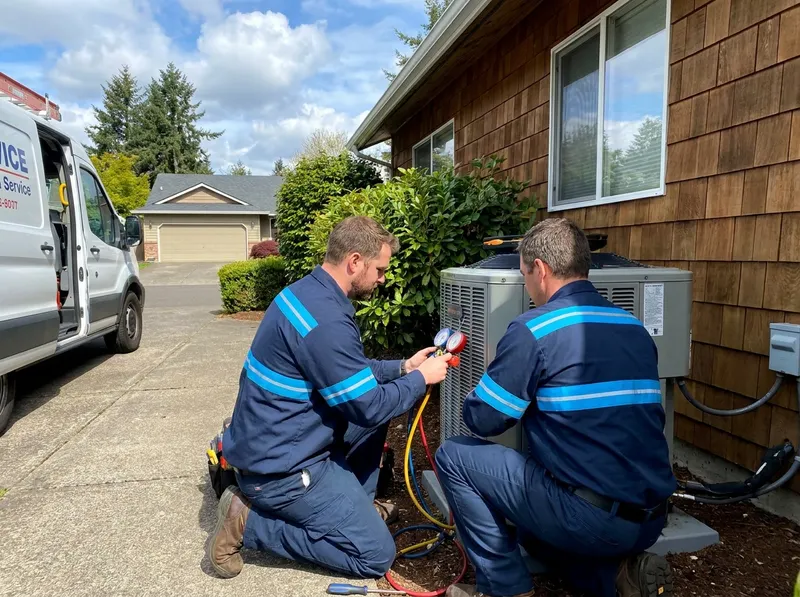
Heat pump repair handles units stuck in defrost mode, low refrigerant, failed reversing valves, and outdoor units that ice over and won't clear — a common complaint after a wet Portland cold snap coats the coil. A heat pump that blows cold air on the coldest days of the year is often just stuck defrosting longer than it should, and that's a controls fix, not always a full compressor replacement. Refrigerant leaks get located and quoted separately from the repair itself, since older R-410A systems can run into availability and cost differences worth explaining before work starts.
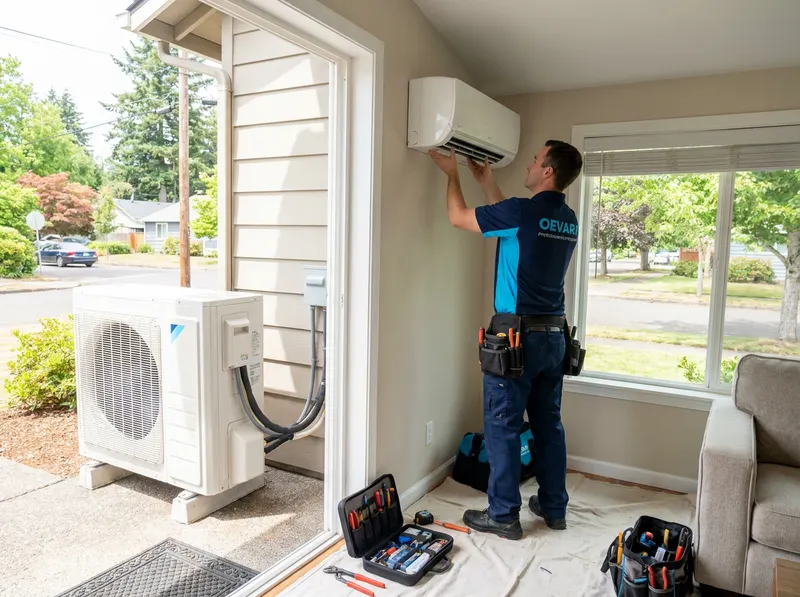
Ductless mini-split installation fits homes with no existing ductwork — a huge share of the pre-1960 housing stock in Laurelhurst, Irvington, and the blocks around Alberta Arts District that were never built with a furnace room or duct chase. One outdoor condenser can run one to four indoor heads, so a single-zone unit covers an addition or converted attic, while a multi-zone setup covers a whole house room by room. Line-set runs are planned to avoid cutting through original fir trim and plaster where possible, since that finish work is part of what makes these houses worth keeping intact.
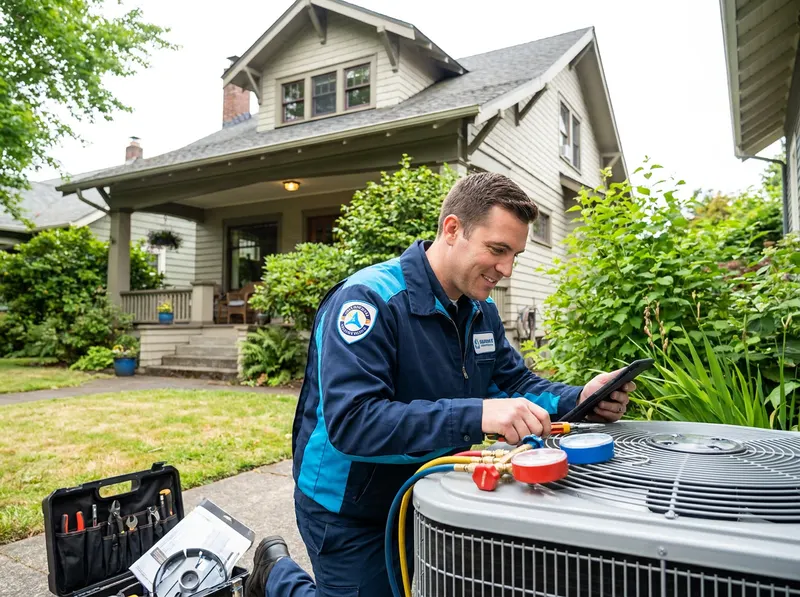
AC repair covers units that won't turn on, blow warm air, trip the breaker, or freeze up mid-summer. During a July or August heat spike near downtown and Pioneer Courthouse Square, the most common failure is a bad capacitor or a dirty condenser coil starved for airflow — both are same-visit fixes once diagnosed. Refrigerant charge gets checked against manufacturer spec rather than topped off blind, since overcharging causes the same warm-air complaint as undercharging.
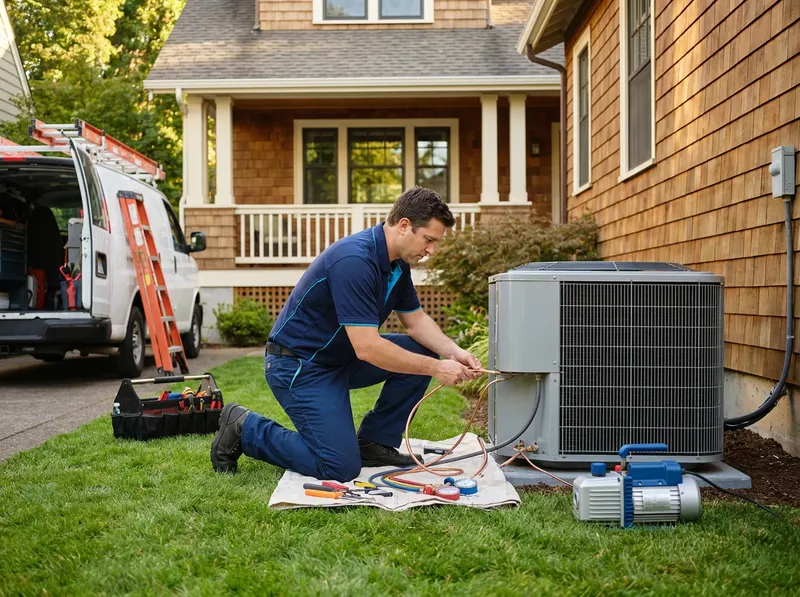
AC installation fits homes that already have a working furnace and duct system and just need cooling added — common in the postwar ranch blocks around Montavilla where a furnace-only setup was standard when the house was built. A matched condenser and coil sized to the existing ductwork avoids the airflow problems that come from bolting an oversized unit onto small supply runs. This is the lower-cost path compared to a heat pump when heating is already handled and cooling is the only gap.
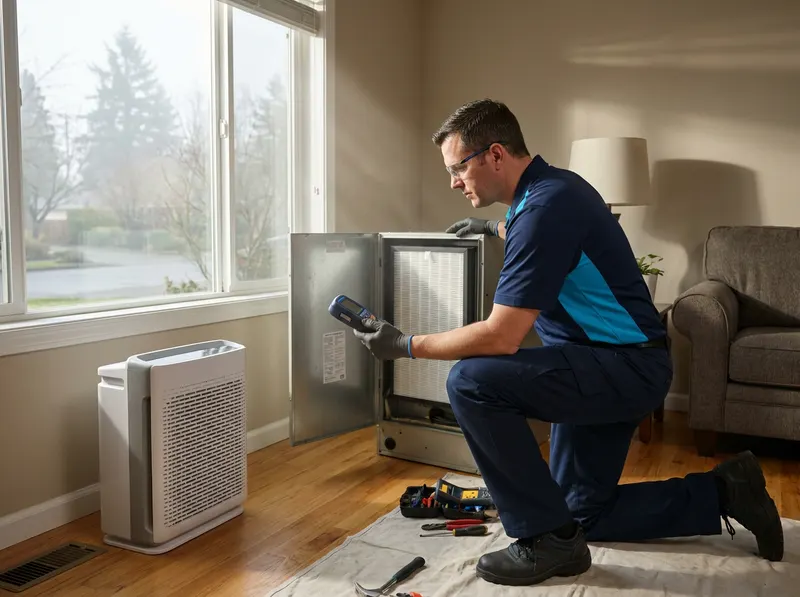
Indoor air quality work covers MERV-13 filter upgrades, duct sealing, and whole-home filtration additions that matter most during the smoke events that settle over Portland in August and September. A furnace or ductless system that's otherwise fine can still leave a house smelling like smoke if the return air isn't sealed and filtered well — this is a lower-cost fix than replacing equipment and it's scheduled fast during smoke advisories because the calls come in short-notice. Filtration upgrades get matched to the existing blower's static pressure rating so a denser filter doesn't choke the system.
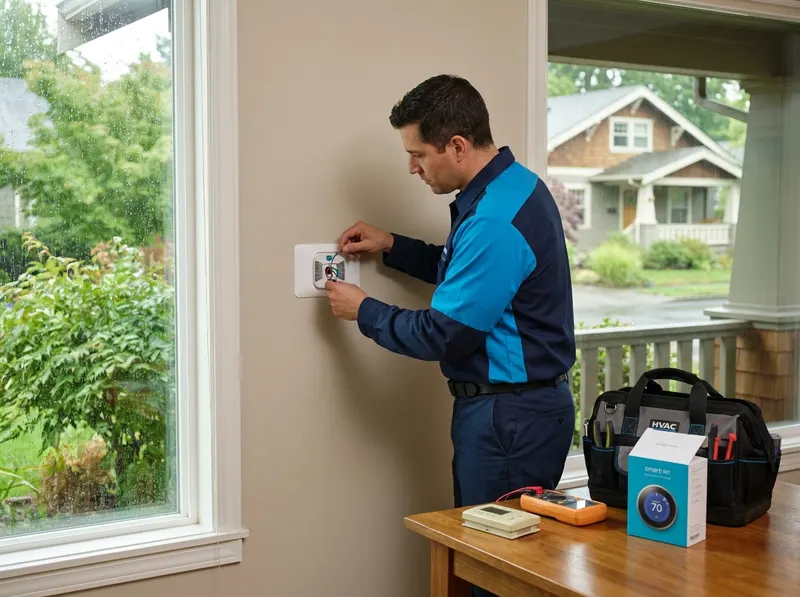
Thermostat installation and replacement covers smart thermostats, dual-fuel controls for homes running a heat pump alongside a gas furnace, and simple manual-to-programmable swaps. Dual-fuel setups matter in Portland because a heat pump alone can lose efficiency below freezing, so the thermostat is programmed to hand off to gas heat automatically instead of leaving that decision to the homeowner.
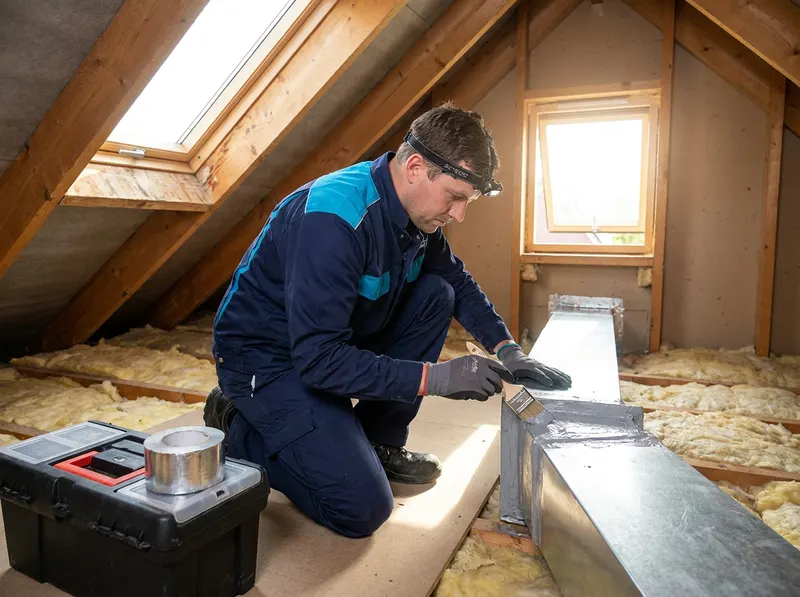
Ductwork repair covers leaking joints, crushed flex runs, and disconnected boots in crawlspaces and attics — a frequent issue in older homes near Sellwood-Moreland where ducts were added decades after the original build and weren't sealed to current standard. Sealed ductwork keeps a furnace or AC from wasting conditioned air into a crawlspace, which shows up as a room that never quite reaches temperature no matter how the thermostat is set.
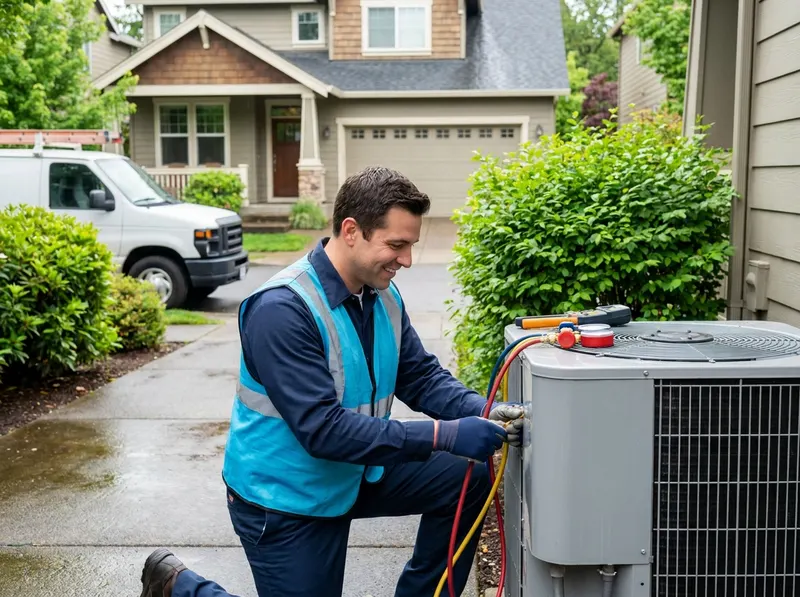
Seasonal tune-ups check burner condition, refrigerant charge, blower amperage, and filter status before the systems that get hit hardest — heat in December, cooling in July — are asked to run flat-out. A fall tune-up ahead of the first cold snap catches a cracked heat exchanger or failing capacitor while it's a scheduled fix instead of a no-heat emergency call.
If a furnace or AC is under 10 years old and the repair estimate runs under half the price of a new unit, fixing it is usually the right call — igniters, capacitors, and blower motors are one-visit repairs that don't argue for a full swap. If the unit is past 15 years old, still runs on R-22 refrigerant, or has already failed twice this season, replacement pencils out better even though the sticker price is bigger, because efficiency drops and parts get harder to source every winter after that. If a home already has ductwork — common in the postwar ranch houses around Montavilla and Lents — a matched furnace-and-AC swap reuses the existing supply and return runs and keeps installation costs down versus tearing into walls. If a home has no ducts at all — typical of the 1900s-1940s craftsman stock in Irvington, Laurelhurst, and near Alberta Arts District — a ductless heat pump system heats and cools off one outdoor condenser without opening a single wall, though it runs higher per zone than adding onto ductwork that's already there. If the goal is year-round comfort from one system instead of a furnace-plus-window-unit patch job, a heat pump handles both heating and cooling and qualifies for Energy Trust of Oregon incentives that knock real money off the install cost; a straight AC-only install skips that incentive path but costs less upfront if the furnace is staying put. If the concern is smoke season air quality rather than temperature, a filtration upgrade or duct-sealing pass costs far less than new equipment and solves a different problem entirely — it won't heat or cool a room, but it keeps particulate out of one that's already comfortable. The trade-off across all of it: repair saves cash today but borrows against next winter's reliability, ductless solves the no-duct problem but costs more per BTU than ducted equipment, and a heat pump's incentive savings only apply to heat pumps — not to AC-only or furnace-only replacements.
| Furnace diagnostic visit | $89 - $150 (often waived if repair is approved) |
| Furnace repair (igniter, capacitor, blower motor) | $200 - $650 |
| Furnace repair (heat exchanger or major component) | $800 - $1,800 |
| Furnace replacement, standard efficiency | $3,800 - $6,500 |
| Furnace replacement, high efficiency | $5,500 - $9,000 |
| Heat pump installation, single-zone ducted | $6,000 - $10,500 |
| Heat pump repair (defrost control, valve, minor part) | $250 - $900 |
| Ductless mini-split, single-zone install | $4,500 - $8,000 |
| Ductless mini-split, multi-zone (3-4 heads) | $10,000 - $18,000 |
| AC repair (capacitor, coil clean, refrigerant check) | $200 - $700 |
| AC installation, matched to existing ducts | $4,500 - $7,500 |
| Duct sealing / repair, per system | $400 - $1,600 |
| Whole-home filtration / IAQ upgrade | $350 - $1,500 |
| Smart or dual-fuel thermostat install | $250 - $600 |
| Seasonal tune-up (furnace or AC) | $99 - $220 |
Call for a firm, all-in price before any work begins.
We give an upfront, written price before any work begins — you approve it first. No surprises.
Our work is done to standard and we stand behind it — a real fix, not a quick patch.
We’ll give you an honest assessment. If you don’t need the work, we’ll tell you.
Portland's housing stock is the real driver of HVAC decisions here: a huge share of the bungalows and craftsman homes in Irvington, Laurelhurst, and around Alberta Arts District went up before central air was standard, so there's no duct chase to reuse and a ductless retrofit is often the only clean option that doesn't mean opening plaster walls. Newer construction near the Pearl District and postwar ranch blocks around Montavilla and Lents already have ductwork, which changes the math toward a matched furnace-and-AC or furnace-and-heat-pump swap instead. Winters here run wet and mild rather than brutally cold, but the first real cold snap in late October or November still catches furnaces that limped through the prior season, and heating emergencies concentrate December through February when a no-heat call can't wait for a weekly schedule slot. Summer works the opposite way — AC and heat pump demand spikes hard during June through September heat waves, and install lead times can stretch several weeks once every crew in Multnomah County is booked solid, which is why spring and fall are the windows to book a full replacement instead of chasing one in July. Wildfire smoke settling over the West Hills, Forest Park, and the rest of the metro in August and September adds a second seasonal spike that has nothing to do with temperature — it's filter and duct-sealing calls from households near Washington Park, Pittock Mansion, and the OMSI area who need cleaner indoor air fast and can't wait weeks for it. Homes on higher ground toward Forest Park and the West Hills also run colder overnight than the valley floor near Woodstock or Sellwood-Moreland, which matters when sizing a heat pump's low-temperature output.